

Tahiti - A Place of Imagination
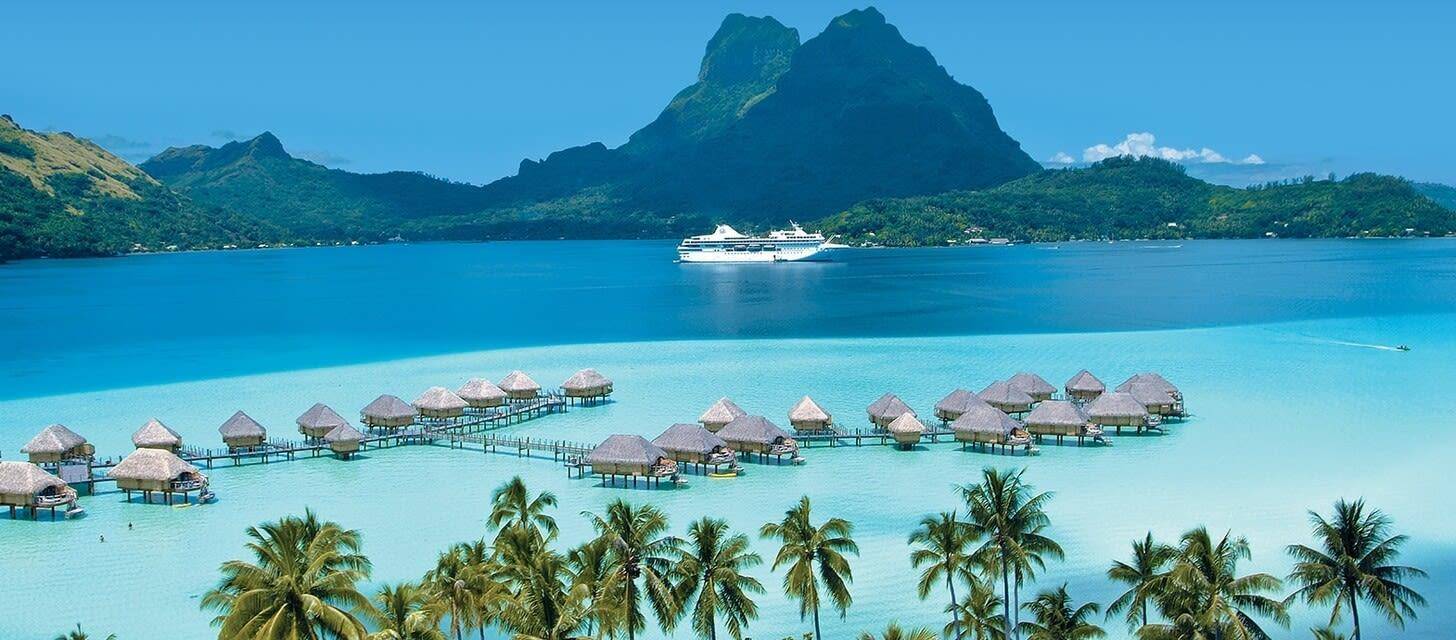
Roger Harris journeys to remote Tahiti, in French Polynesia, in the footsteps of the many explores, navigators, artists and actors that have woven the western fantasy of the South Seas.
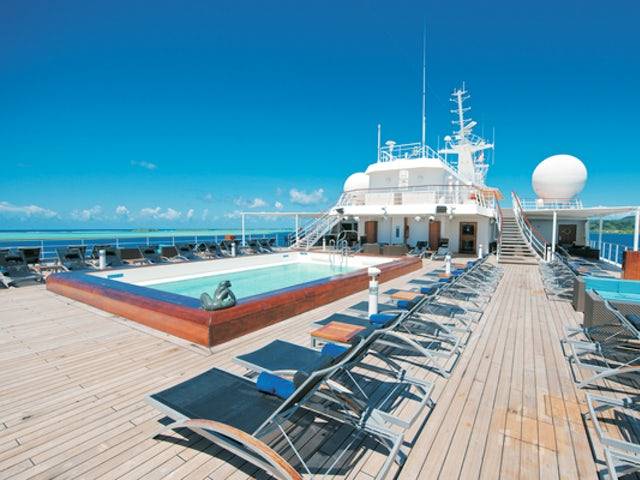
Tahiti is as much a place of the imagination as it is a place on the map. The largest of the 118 islands that make up French Polynesia, it's home to around 70 percent of its population, of whom two thirds are ethnic Polynesians. The indigenous residents descend from early travellers who are believed to have navigated outrigger canoes across thousands of kilometres of ocean to reach a paradise so remote, it is thought to be one of the last places on earth to be settled by humans. Despite the formation of a sophisticated civilisation based on kingdoms and clans, the islands seem to have woven their way into the global imagination through the incursions of an eclectic mix of remarkable foreigners, whose visits had profound effects upon residents and visitors alike.
In June 1767, the British naval officer and explorer Samuel Wallis made the first recorded visit to Tahiti by a European navigator. His ship, HMS Dolphin, remained in Tahiti's Matavai Bay for over a month, allowing Wallis to gather useful information which he later passed on to Captain James Cook.
Wallis narrowly beat the French admiral and fellow explorer Louis-Antoine, Comte de Bougainville, to the islands. De Bougainville later described Tahiti in his 1771 book, A Voyage Around the World, as an "earthly paradise where men and women lived in blissful innocence, far from the corruption of civilization." He characterized the Tahitians as "noble savages," a concept that undoubtedly influenced the romantic visions of later travelers, artists, and philosophers. These figures descended upon this remote archipelago after becoming disillusioned with Western ways of living and thinking.
Captain James Cook arrived in Tahiti in 1769 during his first global circumnavigation to observe the Transit of Venus across the sun, a rare astronomical event that occurs in a specific pattern over a 243-year cycle. This was a critical observation intended to help scientists calculate the astronomical unit (the distance between the Earth and the Sun), which in turn assisted in the calculation of longitude—a breakthrough that greatly facilitated global navigation.
Cook’s voyages across the Pacific allowed him to map Polynesia in more detail than ever before. His immense contributions to geographical knowledge continued to inform scientists and navigators well into the 20th century.
Our next foreign incursion of note was led by Fletcher Christian, who arrived in Tahiti in 1788 on board HMS Bounty, under the command of Lieutenant William Bligh. Their mission was to collect breadfruit plants to be transported to Jamaica and cultivated as a food source for enslaved people there.
The crew had to wait five months for the plants to be ready for transport; during this time, many succumbed to the languid and alluring lifestyle of the islanders. After departing Tahiti the following year, Christian led a group of 18 mutineers and cast Bligh and his loyal followers adrift in a small launch. Christian briefly returned to Tahiti to marry a princess before he and the mutineers, along with several Tahitians, sailed the Bounty to Pitcairn Island, where they established a secluded colony.
Another notable visitor to this idyllic archipelago was Robert Louis Stevenson, the Scottish novelist and travel writer, who arrived in the Marquesas Islands of French Polynesia in 1888. He vividly describes his arrival in the first chapter of In the South Seas (1896):
"The first experience can never be repeated. The first love, the first sunrise, the first South Sea island, are memories apart and touched a virginity of sense..."
It is easy to imagine a similar emotion felt by the French artist Paul Gauguin, who first arrived in Tahiti in 1891. Intent on escaping European civilization and "everything that is artificial and conventional," Gauguin settled in a village and began producing his finest works.
His 1892 masterpiece, When Will You Marry?, sold for a record US$210 million in 2014, yet his art was hardly appreciated during his lifetime. He died in French Polynesia in 1903 at the age of 54, living in relative poverty. Beyond his immense influence on 20th-century artists and writers, Gauguin’s depictions of Tahitians continue to fuel the Western fascination with foreign cultures and the idyllic notion of a simple tropical lifestyle.
All of this leads us to the next notable foreign incursion and the seemingly never-ending legacy of the Bounty adventure. In 1920, the American writer and war hero James Norman Hall arrived in Tahiti with his friend and collaborator Charles Nordhoff. Together, they authored several successful adventure novels, most notably Mutiny on the Bounty (1932). Hall passed away in 1951 in Tahiti; his gravesite overlooks Matavai Bay, the very spot where Captain Bligh first dropped anchor on the Bounty.
The artist Henri Matisse visited Tahiti in 1930, almost certainly following in the footsteps of Paul Gauguin. Although he later claimed that he returned from the islands "absolutely empty-handed," his memories of Tahiti fermented over time. His fascination with traditional Tahitian fabrics and the local landscape eventually gave rise to the distinct look and technique of his later "cut-outs."
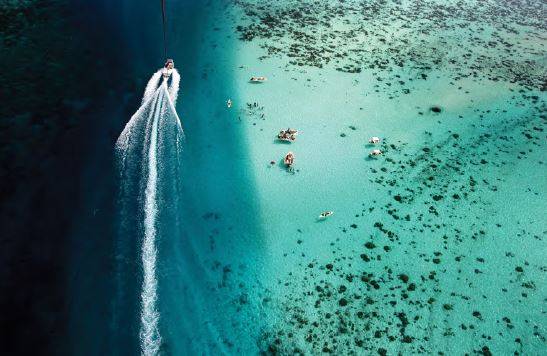
In the 1947 publication Jazz—a limited-edition art book containing prints of cut-paper collages—Matisse recalled his memories of Tahitian lagoons as "one of the seven wonders of the paradise of painters." Jazz is considered the first great expression of this new cut-out technique. Matisse later admitted that the "memories and enchantments" of the Tahitian sky and sea only returned to him 15 years later "in the form of obsessive images."
The actor Marlon Brando arrived in Tahiti in 1961 to star as Fletcher Christian in the MGM movie Mutiny on the Bounty. He fell in love with both the location and his co-star, Tarita Teri’ipaia, the French Polynesian actress who played the role of Fletcher Christian’s princess and who became Brando’s third wife.
Brando eventually purchased the small islands that make up the Teti’aroa atoll—historically a private playground for Tahitian chiefs. He built a small village there to live in and to entertain his friends, while also inviting scientists to study the unique ecology and archaeology of the area.
In his later life, Marlon Brando spent less time on the islands, but his wife continued to operate the village as a modest hotel for more than 25 years. Following Brando’s death in 2004, development began on The Brando, a luxury eco-resort and research center where U.S. President Barack Obama famously stayed to write his memoirs. The resort espouses an opulent yet simplistic experience as a retreat from the tensions of modern city life—exactly the quality that first attracted Brando.
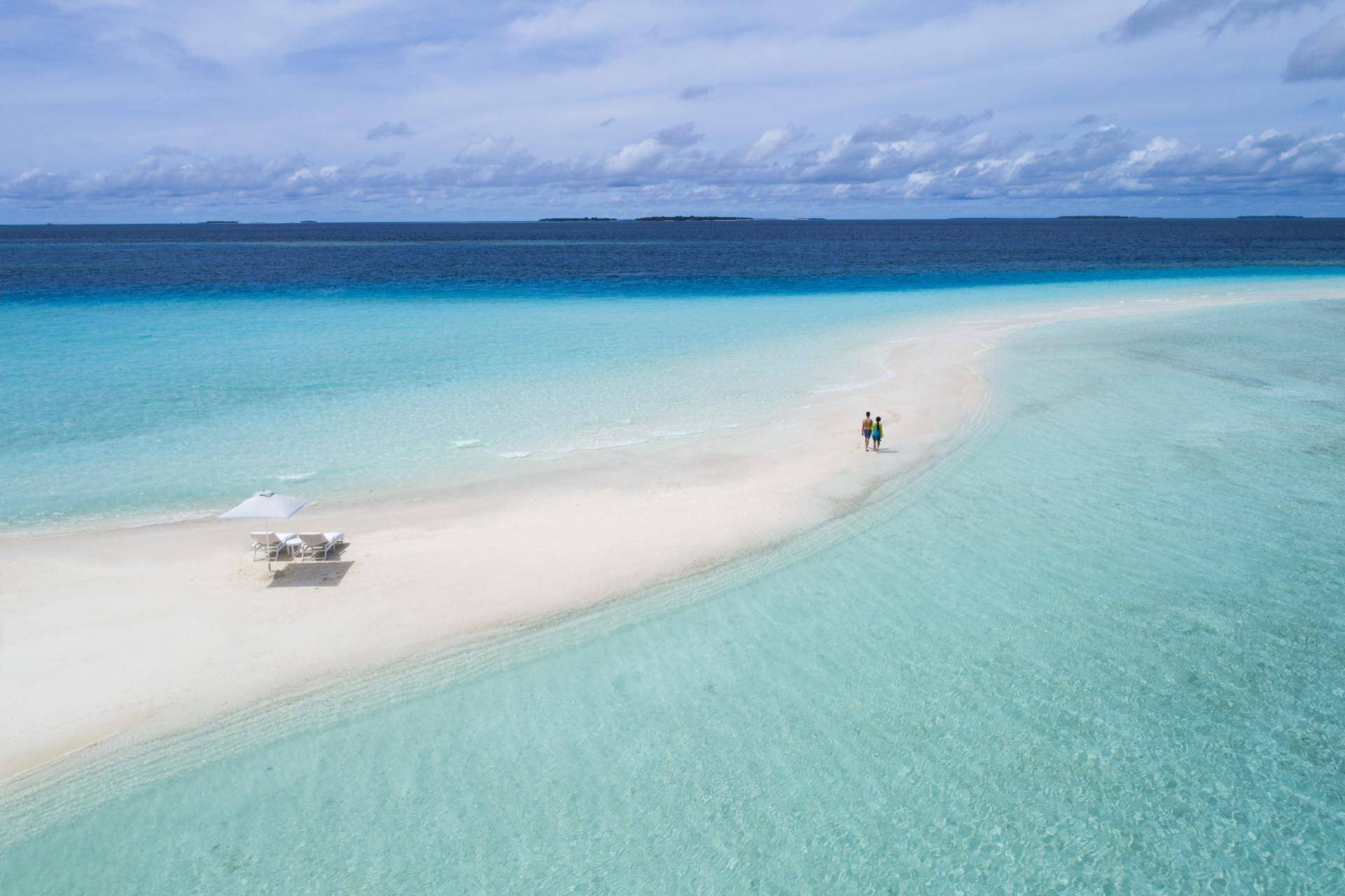
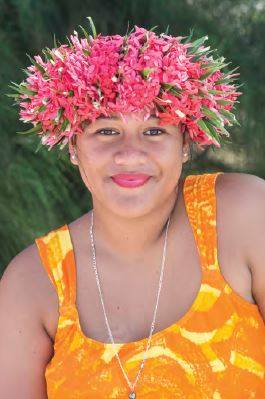
From Wallis to Obama, Tahiti’s image to the rest of the world has been fashioned by outsiders into that of a remote paradise, defined by a relaxed and sensual culture that offers an idyllic return to nature as an alternative to the rigors of modern urban life. The reality is not far from this vision. As a French overseas collectivity with tourism as its principal industry, Tahiti makes it easy for visitors to find exactly what they have come to expect.
There is no denying the beauty of the islands, the magical underwater environment, and the natural Polynesian friendliness of the residents. Tahiti remains a place of the imagination that effortlessly turns its seductive charms on modern-day visitors, just as it has done throughout history.